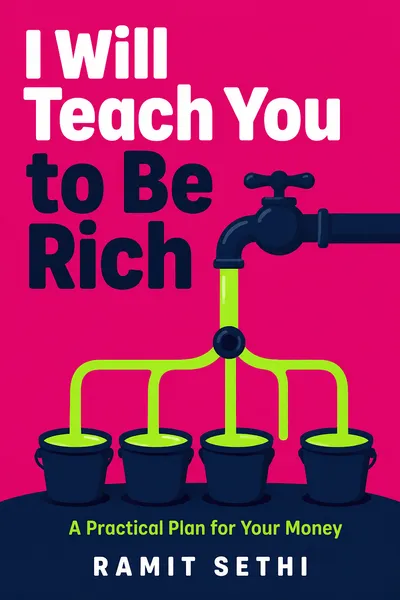
The best personal finance books for your 20s start with two. I Will Teach You to Be Rich by Ramit Sethi sets up the system: where each paycheck goes, decided once and then automated. The Psychology of Money by Morgan Housel covers the behavior: why sensible people still make poor money calls, and how to avoid the common ones.
After those two, pick books by the decision in front of you: a first paycheck, debt, a first investing account, or the beliefs you bring to money. Most of these books assume you live in the US, so we added notes on what changes in the UK, Singapore and Hong Kong, checked on each government's own site, and a one-year reading order with one task after each book.
This is general education, not financial advice. Rules change; check the official source linked for your country.
Start here: the two best personal finance books for your 20s
Sethi tells you what to set up, and Housel tells you how to stay out of your own way once it's running. Most of the other books on this list go deeper into one of those halves or argue with it.
Read Sethi first if you have a salary and no system yet. Read Housel first if you have a system and keep second-guessing it. Sethi's book gets its own entry under your first paycheck, below.
The Psychology of Money (2020) is a set of short essays on why money decisions are rarely spreadsheet decisions. Housel opens with two men: a Vermont janitor who quietly left a fortune when he died, and a Harvard-educated finance executive who went bankrupt. Behavior beat knowledge in both directions.
The idea that matters most in your 20s: compounding rewards time more than brilliance. Housel points out that nearly all of Warren Buffett's net worth, when the book was written, had arrived after his 65th birthday, because he started investing as a boy and never stopped. Your advantage at 25 is the decades ahead, so the job is to avoid anything that forces you to stop, such as debt you can't carry or a plan you'll abandon in a crash.
Skip it if you want step-by-step instructions; it has very few. Try this: write one sentence on what "enough" means for you this year, before your next raise changes the answer. If the book clicks, our list of books like The Psychology of Money goes further.
Your first paycheck: a budget that runs itself
The first decision is where the money goes before you've had a chance to spend it.
I Will Teach You to Be Rich (Ramit Sethi)
Money arrives and leaves, and nothing in between gets decided. That's the problem this book (first published 2009, second edition 2019) solves. Sethi's answer is a Conscious Spending Plan with four buckets (fixed costs, investments, savings goals and guilt-free spending), then automation. On payday, scheduled transfers move money into each bucket before you see it, and you spend the guilt-free part without logging every coffee.
It suits the reader who wants a weekend project with a finished result; skip it if your pay already splits itself on payday. If you live outside the US, read the account and credit-card chapters for the reasoning only: the 401(k), Roth IRA and credit-score advice is American (see the market notes below). Try this: schedule one automatic transfer to savings for the day after payday, before you read past the first chapters.
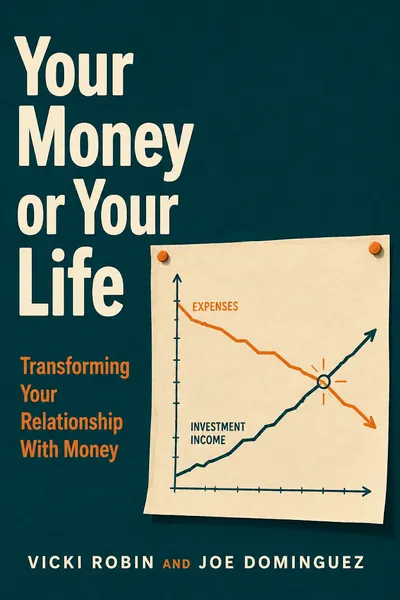
Your Money or Your Life (Vicki Robin and Joe Dominguez)
Your Money or Your Life (1992, revised 2018) measures spending in hours of your life instead of money. Its central exercise is your real hourly wage. Take your pay, subtract what the job itself costs you (commuting, plus the meals and clothes you buy only because you work), and divide by all the hours the job really takes, travel and recovery included.
A worked example, in whatever currency you're paid: 1,200 a week for 40 hours is 30 an hour on paper. Subtract 200 a week in job costs and add 10 hours of commuting and wind-down, and you take home 1,000 for 50 hours, or 20 an hour. A dinner out that costs 100 now costs five hours of your life. Sometimes that's a fair trade. The book only asks you to decide on purpose.
Skip it if you already track spending and like what you see. Try this: work out your own real hourly wage once and keep the number in your phone's notes.
The Richest Man in Babylon (George S. Clason)
First published as a book in 1926, this one teaches a single habit through parables set in ancient Babylon: pay yourself first. Its rich man, Arkad, keeps at least a tenth of everything he earns before he pays anyone else, and the book's line "a part of all you earn is yours to keep" has outlived most finance books. Read it for that habit; the investing stories, about lending gold, belong to their era.
It's short and suits anyone who would rather read a story than a manual. Skip it if you've already automated your saving. Try this: pick the share of each paycheck you'll keep, and make it the first transfer.
If you want a first-salary book written for your own generation, Erin Lowry's Broke Millennial (2017) covers student loans and the awkward money conversations with partners and friends. Knotd doesn't carry it, and it's a good companion to Sethi.
Paying off debt: the snowball, and what the research says
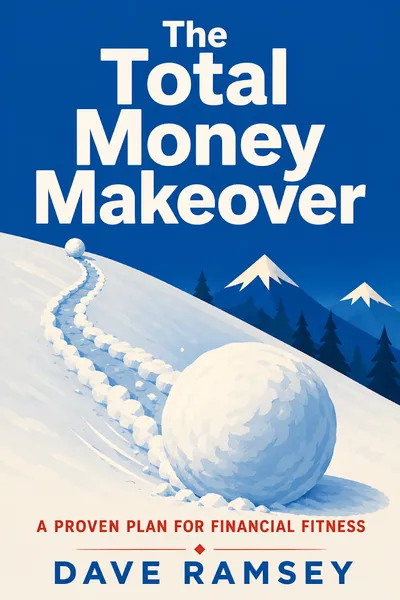
The Total Money Makeover (Dave Ramsey, 2003) is a strict, ordered plan for getting out of debt, written after Ramsey went bankrupt himself in his twenties. Its core is the debt snowball. List every debt except the mortgage from the smallest balance to the largest, pay the minimum on all of them, and put every spare amount on the smallest. When it's gone, roll its payment into the next one.
The usual objection is fair. Paying the highest interest rate first (the "avalanche") costs less on paper, and Ramsey accepts that. His argument is that debt is mostly a behavior problem, and quick wins keep people going.
The best-known evidence on his side is a study of nearly 6,000 clients of a debt settlement firm by David Gal and Blakeley McShane, published in 2012. Closing accounts predicted clearing all the debt, whatever the balances on the closed accounts. The dollar balance of closed accounts did not predict it once the share of accounts closed was taken into account. In Kellogg's write-up of the study, a "start small" debtor was about 14% more likely to eliminate their debt after a year, and 43% by year four.
The limits matter. These were people in a settlement program, where the firm negotiates balances down, not people paying cards off on their own. The data are observational, and the researchers caution that accounts closed and dollars repaid are highly correlated and hard to separate.
The fair reading is that visible progress helps people persist. If motivation is your weak spot, the snowball is a reasonable choice. If you're disciplined and your highest-rate debt is also large, the avalanche saves money.
Skip Ramsey if you have no consumer debt. Try this: list every debt on one page with its balance, interest rate and minimum payment, which is the first step of either method.
Your first investing account: the best books for investing as a beginner
Once the debt is handled, the question is what to do with money you won't need for decades.
The Simple Path to Wealth (JL Collins)
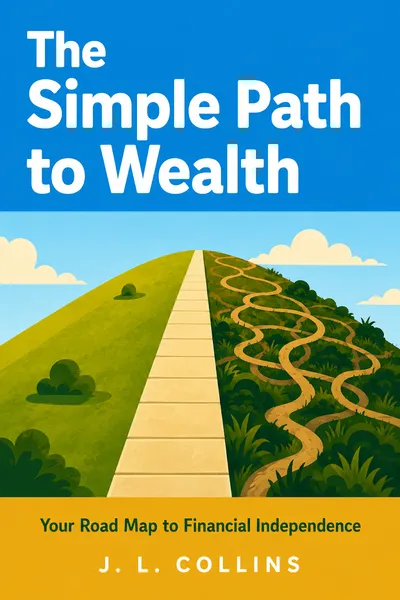
The Simple Path to Wealth (2016) started as letters from Collins to his daughter, and it reads that way: plain and opinionated. The plan is to spend less than you earn, invest the difference in a broad, low-cost stock index fund, avoid debt, and hold on through crashes, which he treats as normal weather rather than emergencies. He separates the years when you build wealth, mostly in stocks, from the years when you live on it and add bonds.
Collins names a specific American fund. Outside the US, keep the principle (broad, cheap, held for decades) and look for the local equivalent. Skip it if you want to understand why index funds work, which is Malkiel's job. Try this: find out what your workplace retirement account is invested in, and what it charges.
A Random Walk Down Wall Street (Burton Malkiel)
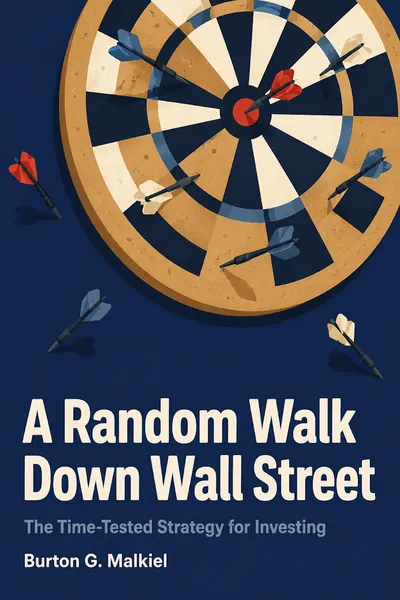
A Random Walk Down Wall Street (1973; the 13th edition came out for its 50th anniversary in 2023) is the evidence behind that plan. Malkiel, a Princeton economist, argues that prices absorb public information so quickly that picking winning stocks or timing the market is a game few people win for long, and that low-cost index funds beat most professional managers over time. The chapters on historical bubbles, from Dutch tulips to dot-com shares, are the most readable part.
Skip it if you have no doubts about index funds and want only the steps; Collins covers those. Try this: compare the yearly fees on two funds you could buy today.
The Intelligent Investor (Benjamin Graham), for later
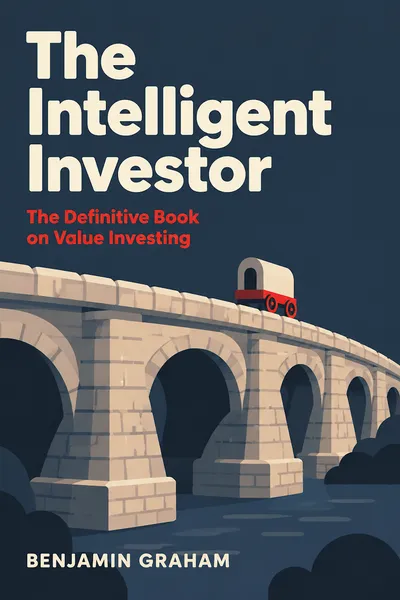
The Intelligent Investor (1949) is heavier going, and for a beginner its value comes down to two ideas. Mr. Market is a moody business partner who quotes you a new price every day, and you're free to ignore him. The margin of safety means buying with room for error. Read the 2003 edition with Jason Zweig's commentary, which ties Graham's examples to modern markets and points Graham's "defensive investor" toward index funds, close to what Collins and Malkiel describe. Leave it until you've held investments through at least one real drop.
Many readers would add John C. Bogle's The Little Book of Common Sense Investing (2007) to this section: the case for owning the whole market at low cost, from the founder of Vanguard. Knotd doesn't carry it, and it works well in place of either of the first two books here.
The mindset books people argue about
These two turn up on most lists of money books for young professionals, and both are argued over. They're worth reading once you know what the argument is about.
The Millionaire Next Door (Thomas Stanley and William Danko)
The Millionaire Next Door (1996) came out of surveys of wealthy Americans and found that many of them looked unremarkable: modest homes and used cars. Its most useful split is between "prodigious accumulators of wealth," who hold far more than their income predicts, and "under accumulators," who earn well and keep little. For a well-paid 25-year-old, the warning is about the spending that comes with looking successful.
The debate is about method. The authors surveyed people who were already rich, so the sample shows only survivors: people who lived the same way and never got rich aren't in it. Nassim Nicholas Taleb made that case in Fooled by Randomness (2001), in a chapter titled "Too Many Millionaires Next Door." Stanley and his daughter, Sarah Stanley Fallaw, later ran a new survey for The Next Millionaire Next Door (2018). Try this: list the spending that exists mainly to show you're doing well.
Rich Dad Poor Dad (Robert Kiyosaki)
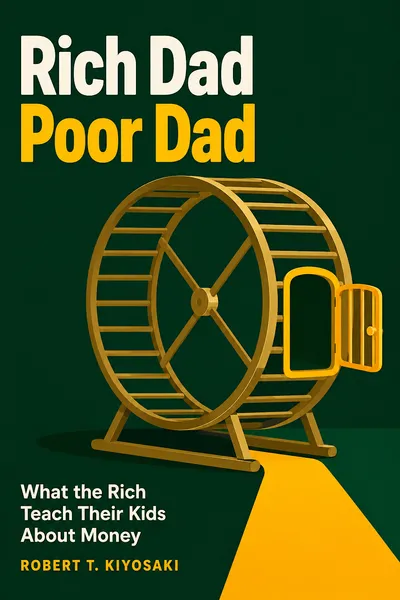
Rich Dad Poor Dad (1997) sells on a simple story about two fathers, one educated and short of money, the other self-taught and rich. It also gives readers a definition that changes how they see their own finances: an asset puts money in your pocket, and a liability takes it out. By that rule, the home you live in is a liability, which is where many of the arguments start.
The bigger debate is about tactics, and it plays out inside this list. Kiyosaki favors borrowing to buy income-producing assets such as rental property. Ramsey argues against almost all debt. Read Rich Dad Poor Dad for the assets mindset, and check any specific tactic, especially on property and tax, against current sources and the rules where you live. Try this: sort what you own into assets and liabilities by Kiyosaki's definition.
One more book belongs in this argument. Bill Perkins's Die With Zero (2020) makes the case that careful savers often spend too little on experiences while they can still enjoy them. It's a useful counterweight to every save-first book above. Knotd doesn't carry it.
Where these books are American, and what's different where you live
Most lists of the best finance books for 20-somethings are written for Americans, and so are most of the books. The principles travel. The accounts and tax rules don't. The table maps the two kinds of account the books keep mentioning to their nearest local equivalents, with the official page for each. We opened every page on 14 October 2026.
| Market | Workplace retirement scheme | Tax-advantaged personal account | Official source |
|---|---|---|---|
| US | 401(k), if your employer offers one | IRA (traditional or Roth) | IRS: 401(k) plans, IRS: IRAs |
| UK | Workplace pension (automatic enrolment) | ISA | GOV.UK: Workplace pensions, GOV.UK: ISAs |
| Singapore | CPF (citizens and PRs) | SRS | CPF Board, IRAS: SRS |
| Hong Kong | MPF | Tax-deductible voluntary contributions (TVC) | MPFA: MPF, MPFA: TVC |
United States. The books were written for you. In a traditional 401(k), the IRS says your salary deferrals are excluded from taxable income now, and withdrawals, earnings included, are taxed in retirement. Designated Roth deferrals don't get that exclusion, but qualified withdrawals from them are tax-free. An IRA is the account you open yourself; Roth IRA contributions aren't deductible, but qualified withdrawals may be tax-free. Sethi's order of operations assumes exactly these accounts.
United Kingdom. Your employer must enroll you in a workplace pension automatically if you're a worker aged between 22 and State Pension age, earn at least the yearly amount GOV.UK sets and usually work in the UK, and in most cases your employer adds money too. The ISA is the personal account: you can save tax-free from age 18, in one of four types, and you must be under 40 to open a Lifetime ISA. One place where the advice doesn't translate: US books treat student loans as debt to clear fast, but UK student loans are repaid as a percentage of income above a threshold, and GOV.UK says the amount you owe doesn't change what you repay each year. That's a different calculation from a credit card's, so read those rules before putting a student loan at the top of a debt snowball.
Singapore. CPF covers citizens and permanent residents. You and your employer both contribute, and the money sits in separate accounts for housing (Ordinary), retirement (Special) and healthcare (MediSave). At 55, a Retirement Account is created and the Special Account closes. The SRS is voluntary and complements CPF; IRAS says foreigners can contribute as well as citizens and PRs, and contributions qualify for tax relief. Where the advice doesn't translate: a US "save a fixed share for retirement" rule ignores the mandatory share CPF already takes, and Ramsey's push to pay off the house early reads differently when the Ordinary Account can pay the mortgage.
Hong Kong. Employees aged 18 to 64 who have been employed continuously for 60 days or more must be enrolled in an MPF scheme unless exempt, and both employer and employee contribute, according to the MPFA. TVC is the personal top-up: open to MPF account holders, tax-deductible up to an annual cap, and kept until age 65 or other statutory grounds. Where the advice doesn't translate: TVC is the nearest thing to an IRA, but the money is locked until 65 except on statutory grounds, so it's no place for an emergency fund. Collins's index-fund advice becomes a question about which funds your MPF scheme offers and what they charge.
A one-year reading order
About a book a month, with one action after each, turns a stack of financial books to read in your 20s into a year of finished tasks. The order follows the decisions: the system first, then debt, then investing, then the arguments, with Graham saved for last. If a book a month sounds like a lot next to a full-time job, our guide on how to read more with a full-time job covers how people fit it in.
Finance is the largest topic in Knotd, our app, with 50 books on the Finance shelf, and all seven books on the Money shelf, Sethi's and Collins's among them, are on this list. In the app, Hot Take is a quick way to test which money beliefs you still hold: a card from The Simple Path to Wealth says "To do well with shares, you need to pick the winning companies," you swipe true or myth, and Collins's answer follows.
| Months | Book | What to do after reading it |
|---|---|---|
| 1 | I Will Teach You to Be Rich | Set up automatic payday transfers to savings and retirement |
| 2 | The Psychology of Money | Write your money rules in a note, starting with what "enough" means this year |
| 3 | Your Money or Your Life | Work out your real hourly wage |
| 4 | The Richest Man in Babylon | Pick the share you'll pay yourself first, and automate it |
| 5 to 6 | The Total Money Makeover | List every debt by balance and rate; choose snowball or avalanche |
| 7 | The Simple Path to Wealth | Open or check your account: 401(k) or IRA, pension or ISA, CPF or SRS, MPF or TVC |
| 8 | A Random Walk Down Wall Street | Compare the fees on the funds available to you |
| 9 | The Millionaire Next Door | Mark the spending that's mainly for show |
| 10 | Rich Dad Poor Dad | Sort what you own into assets and liabilities, using Kiyosaki's definition |
| 11 to 12 | The Intelligent Investor | Write a one-page plan: what you buy, and what you'll do in a crash |