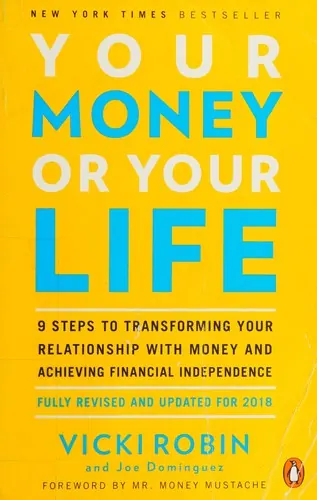
Cover of Your Money or Your Life

Money

Your Money or Your Life

by Vicki Robin and Joe Dominguez

What does your pay really cost?

Joe Dominguez retired from Wall Street at thirty-one and lived on the income from his savings. With Vicki Robin, he turned his method into a nine-step programme. It rests on one idea. You pay for everything with hours of your life, and those hours run out.

Hear a sample · read by Laura

0:29

What you'll learn

  • Life energy
  • Your real hourly wage
  • Track every cent, then ask
  • Enough
  • The Crossover Point

The key ideas in Your Money or Your Life

Life energy

Robin and Dominguez define money as something we choose to trade our life energy for. Life energy is the hours of your life, and you have a limited number of them. Seen that way, everything you buy costs hours, and the question is whether it was worth them.
Your real hourly wage

Take your pay and subtract what the job costs you, from commuting and work clothes to the takeaways and treats you buy to recover. Then add the hours you spend getting there and unwinding. Divide the money by the hours. Most people find they earn far less than they thought.

Track every cent, then ask

Step two is to write down every cent that comes into or goes out of your life. There's no budget. At the month's end you total it by category, turn each total into hours, and ask whether it brought fulfilment in proportion to the life energy it cost.

Enough

The authors draw a Fulfilment Curve. Spending on survival and then comforts makes life much better. Then the curve flattens, and past a peak, more stuff brings clutter and worry instead. They call that peak Enough, and it sits in a different place for everyone.

The Crossover Point

Each month you plot your income and spending on a wall chart. As your savings grow, you add a third line for what they earn when invested. The month that line rises above your spending is the Crossover Point. From then on, paid work becomes a choice.

Lines worth underlining

  1. Life energy

    Money is what you trade your hours of life for, so every purchase costs you time.

  2. Real hourly wage

    Work out your real hourly pay once you count the commute, work clothes and time spent unwinding.

  3. Track it

    Write down every cent that comes in or goes out, however small. Most people have no idea where it goes.

  4. Enough

    Past a certain point, more stuff stops making you happier and starts weighing you down.

  5. Monthly check

    Each month, ask whether what you spent gave you as much as the life it cost you.

One thing to try

Count every cent for a week

For the next seven days, write down every cent you spend, from rent to chewing gum, in a notebook or on your phone. On Sunday, divide each total by what you earn an hour, and look at which purchases cost you the most hours of your life.

There's more to Your Money or Your Life

Knotd has the key ideas from 250+ non-fiction books, each in a few minutes, in plain words. Your Money or Your Life comes with a Name That Idea round and a Your Move story to make it stick.

Get the whole book on KnotdOpen in the app

Questions about Your Money or Your Life

What is Your Money or Your Life about?

What does your pay really cost? Joe Dominguez retired from Wall Street at thirty-one and lived on the income from his savings. With Vicki Robin, he turned his method into a nine-step programme. It rests on one idea. You pay for everything with hours of your life, and those hours run out.

What are the key ideas in Your Money or Your Life?

Life energy; Your real hourly wage; Track every cent, then ask; Enough; The Crossover Point.

What's one thing to try from Your Money or Your Life?

For the next seven days, write down every cent you spend, from rent to chewing gum, in a notebook or on your phone. On Sunday, divide each total by what you earn an hour, and look at which purchases cost you the most hours of your life.

Is Your Money or Your Life on Knotd?

Yes. Knotd has the key ideas from Your Money or Your Life in a few minutes, in plain words, plus a Name That Idea round and a Your Move story to test them. It's one of 250+ non-fiction books in the app.