The best books like The Psychology of Money depend on what you liked about Morgan Housel. For his stories of ordinary people who quietly got rich, read The Millionaire Next Door. For luck and risk, read Fooled by Randomness. For the psychology behind money mistakes, read Misbehaving. For long-term thinking from investors, read Poor Charlie's Almanack.
Those four and five more follow, each matched to the chapter of Housel's book it builds on. For each one we say what it adds that Housel doesn't, one idea from it in our own words, who should skip it, and one thing to try. If you want a refresher on Housel first, his book has its own page: The Psychology of Money.
This is general education about books, not financial advice.
Books like The Psychology of Money, matched to the chapter you liked
Housel's chapters are short, and each one makes a single point. Books similar to The Psychology of Money usually take one of those points much further, so find the chapter you remember in the left column.
| If you liked… | Read | What it adds |
|---|---|---|
| Ronald Read, the janitor (introduction) | The Millionaire Next Door | Survey data on how wealthy households live, plus a net-worth yardstick |
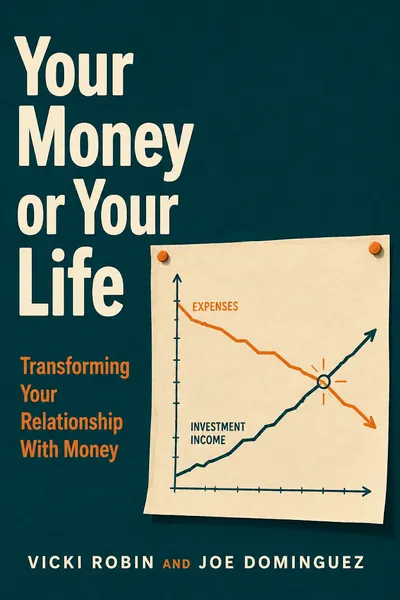
| "Never Enough" (ch. 3) | Your Money or Your Life | A nine-step program that prices purchases in hours of your life |
| "Luck & Risk" (ch. 2) | Fooled by Randomness | A way to judge a decision by the outcomes that didn't happen |
| The chapter on surprises (ch. 12) | Against the Gods | The history of how people learned to measure risk |
| "Getting Wealthy vs. Staying Wealthy" (ch. 5) | The Most Important Thing | An investor's definition of risk as permanent loss |
| "Reasonable > Rational" (ch. 11) | Misbehaving | The experiments behind the behavior, from a Nobel economist |
| The 2018 essay's list of 20 biases | Poor Charlie's Almanack | Munger's catalog of misjudgment tendencies, and the habit of inverting |
| "Confounding Compounding" (ch. 4) | The Essays of Warren Buffett | Buffett's own reasoning, arranged by theme |
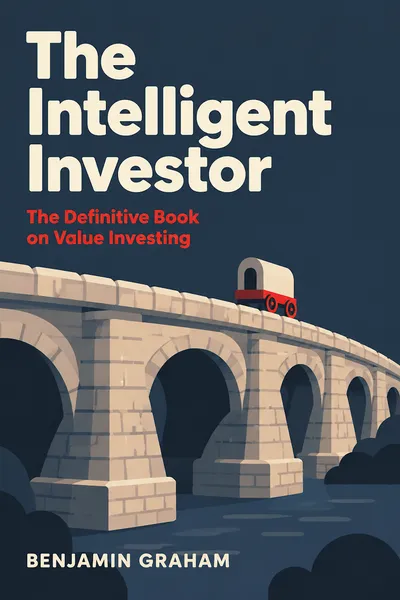
| "Room for Error" (ch. 13) | The Intelligent Investor | The original margin of safety, and Mr. Market |
If you're deciding what to read after The Psychology of Money and want one order, go stories, then psychology, then risk, then investors: The Millionaire Next Door, Misbehaving, Fooled by Randomness, Poor Charlie's Almanack. Each is a step less narrative and a step more argued than the last.
Knotd, our app, carries all nine. Most sit in Finance, its largest topic, and each has a Key Cards deck you swipe through that ends on one thing to try, the same move as the "Try this" lines below.
Stories of ordinary people who built wealth
Housel opens with Ronald Read, a gas station attendant and janitor who left a fortune when he died. The point is that saving and patience can beat salary. Two older books make that point with more evidence and more method.
The Millionaire Next Door
Thomas J. Stanley and William D. Danko, 1996
Stanley and Danko surveyed and interviewed wealthy American households and found that most looked nothing like the rich on television. Many ran ordinary businesses and lived well below their income.
What it adds: Housel's chapter "Wealth Is What You Don't See" makes the claim. This book gives you a rough test for it. Multiply your age by your household's yearly pretax income and divide by ten: that's the net worth the authors would expect. Twice that or more makes you what they call a "prodigious accumulator of wealth"; half or less, an "under accumulator."
Skip it if you're early in your career and expect the number to grade you. At 25 you've had little time to save, so read the formula as a direction. The research is American and older than the book, so the dollar figures are dated.
Try this: run the formula once, write down the gap, and run it again a year from now.
Your Money or Your Life
Vicki Robin and Joe Dominguez, 1992, revised 2018
This is the book for people who earn more each year and don't feel richer. It treats money as something you trade hours of your life for, and asks you to count those hours honestly. Your real hourly wage is the pay left after the costs of having the job, divided by every hour the job takes, travel and unwinding included.
What it adds: Housel's "Never Enough" chapter tells you to know when to stop. This book turns enough into a worksheet: a nine-step program built on tracking every dollar in and out, then asking whether each kind of spending was worth the hours it cost.
Skip it if you won't track your spending for a month. The program depends on it.
Try this: price your next large purchase in real working hours before you buy it.
Luck, risk and humility
Housel's "Luck & Risk" chapter tells of Bill Gates and his school friend Kent Evans, a gifted student who died in a mountaineering accident before graduating. Housel calls luck and risk siblings: both are the part of an outcome that effort doesn't explain. Three books stay on that idea much longer.
Fooled by Randomness
Nassim Nicholas Taleb, 2001
Taleb traded options before he wrote books, and this one is about the traders he watched mistake a lucky run for skill. Its best tool is "alternative histories": judge a decision by every outcome it could have produced, not only the one that happened. Someone who gets rich playing Russian roulette still made a terrible bet, even though the gun didn't fire.
What it adds: Housel asks you to be humble about luck. Taleb gives you a method for it, and a sharper account of survivorship bias: you only hear from the funds and founders who lasted. Put that question to The Millionaire Next Door too, since its authors studied people who were already rich. The two books read well back to back.
Skip it if you want a tidy argument. Taleb writes in digressions and picks fights with economists and journalists. Some readers love the style; others find it hard going.
Try this: take one recent win and write down two realistic ways it could have gone wrong.
Against the Gods
Peter L. Bernstein, 1996
A history of how people learned to measure risk, from Blaise Pascal and Pierre de Fermat working out in 1654 how to split the stakes of an unfinished game, to Harry Markowitz's 1952 paper on building a portfolio.
The idea to keep comes from Daniel Bernoulli in 1738: the value of a gain depends on how much you already have. The same bonus means more to a new analyst than to a partner at the firm, so people in different positions can sensibly take different risks.
What it adds: Housel's chapter on surprises warns that the past is a poor map of the future. Bernstein shows where our tools for measuring risk came from, and where they stop working.
Skip it if you want practical steps; it's history, with plenty of mathematics told as stories.
Try this: after an unusually good or bad result, expect the next to land closer to average (Francis Galton's regression to the mean, which Bernstein covers).
The Most Important Thing
Howard Marks, 2011
Marks co-founded Oaktree Capital in 1995 and has written memos to clients since 1990. The book grew out of them, and a July 2003 memo carries the same title. The full memo archive is public on Oaktree's site.
Two ideas earn the book its place. Second-level thinking: a first-level thinker says a good company is a good buy, while a second-level thinker checks what the price already assumes. And risk as the chance of losing money for good, rather than the size of price swings.
What it adds: Housel's "Getting Wealthy vs. Staying Wealthy" chapter says the first job is to survive. Marks gives the investor's version: count risk as permanent loss, and since you can't forecast, know where the market's mood sits in its cycle.
Skip it if you hold a broad index fund and are happy not to think about cycles. Marks writes for people who make active calls.
Try this: read the 2003 memo first. If it clicks, the book expands on it.
Behavioral finance books: the psychology behind money mistakes
Housel's chapter "Reasonable > Rational" argues that people make money choices that make sense to them even when they fail a textbook test. Misbehaving is the research behind that idea, told by the economist who did much of it.
Misbehaving
Richard Thaler, 2015
Thaler tells how behavioral economics grew from a list of oddities he kept as a young economist into a field. The Royal Swedish Academy's announcement of his 2017 Nobel prize singles out his work on mental accounting and self-control.
One idea in our words: mental accounting. People keep separate jars in their heads, so a tax refund feels like fun money while the same sum in a paycheck feels like rent.
What it adds: experiments, and a fix that worked. In Save More Tomorrow, employees agreed in advance to save more from each future raise. At the first company to try it, 78 percent of those offered the plan joined, and participants' average saving rate rose from 3.5 to 13.6 percent over 40 months (Thaler and Benartzi, 2004). That was one employer, so read it as a proof of concept.
Skip it if you want money advice; it's the story of a field.
Try this: pick one mental jar, such as a tax refund, and decide whether you'd spend it the same way if it came in your salary.
For the wider psychology of judgment, see our list of books like Thinking, Fast and Slow.
Long-term thinking from investors
Housel's "Confounding Compounding" chapter points out that nearly all of Warren Buffett's fortune came after his 65th birthday, because he started young and never stopped. These three books come from the people behind that record: Buffett, his partner Charlie Munger, and his teacher Benjamin Graham.
Poor Charlie's Almanack
Charlie Munger, edited by Peter D. Kaufman, 2005
Munger was Buffett's partner at Berkshire Hathaway for decades, and this book collects eleven of his talks. Start with "The Psychology of Human Misjudgment," his catalog of the mental tendencies that lead people astray, from the pull of incentives to social proof. Housel's 2018 essay uses the same format, a numbered list of 20 money biases.
One idea in our words: invert. Instead of planning how to succeed, list what would guarantee failure and avoid those things.
What it adds: breadth. Munger argues that good judgment needs the big ideas from several fields, from psychology to engineering, held together as a "latticework of mental models."
Skip it if you want a quick read. It's a large book best taken in pieces.
Try this: before your next big money decision, list the surest ways to make it fail, then check that your plan avoids each one.
The Essays of Warren Buffett
Warren Buffett, edited by Lawrence A. Cunningham, 1997
Cunningham took Buffett's letters to Berkshire shareholders and rearranged them by theme, from corporate governance to acquisitions. Every annual letter back to 1977 is free on Berkshire's site, so the book's value is the arrangement.
One idea in our words: Mr. Market, borrowed from Graham. Picture a business partner who offers to buy or sell your share every day at a price set by his mood. You're free to ignore him, and his mood tells you about him, not the business. Buffett tells it at length in his 1987 letter.
What it adds: Housel writes about Buffett from outside. Here Buffett explains his own reasoning, mistakes included.
Skip it if you'd rather read the letters in order; then go straight to the source.
Try this: read the Mr. Market passage in the 1987 letter.
The Intelligent Investor
Benjamin Graham, 1949, last revised by Graham in 1973
The heaviest book here. Graham separates the "defensive" investor, who wants safety and little effort, from the "enterprising" investor, who is willing to do the research. His central rule is the margin of safety: buy only when the price sits well below your estimate of value, so you can be wrong and still be fine. Housel's "Room for Error" chapter applies the same idea to the rest of life.
Who it's for: people who analyze individual companies, or who want the source of value investing. If that isn't you, follow Buffett's pointer in his preface and read chapter 8 (Mr. Market) and chapter 20 (margin of safety).
Skip the full book if dated market detail bores you. Editions with Jason Zweig's commentary update the examples.
Try this: read chapter 8 after Buffett's 1987 letter and compare how teacher and student tell the Mr. Market story.
Housel's other work: Same as Ever and the Collaborative Fund essays
If what you liked most was Housel's voice, read more Housel before anything above. Same as Ever: A Guide to What Never Changes (Portfolio, November 2023, 240 pages, as listed by the publisher in October 2026) is a book of stories about the parts of human behavior that hold steady across history, and why they're a better guide to what comes next than forecasts. Knotd doesn't carry it.
Housel is a partner at Collaborative Fund. The Psychology of Money shares its title and several ideas, among them room for error and the man in the car paradox, with his June 2018 essay linked above. He still publishes on the firm's blog, including "A Few Things I'm Pretty Sure About" (January 2026) and "Long-Term Money" (April 2026). They're free, and they read like extra chapters of the book.
Ready to act: from how you think to what you do
The books above change how you think about money; they don't tell you what to do with your next paycheck. For those decisions, such as where a first salary goes or which first investing account to open, our list of personal finance books for your 20s is organized by the choice in front of you.