
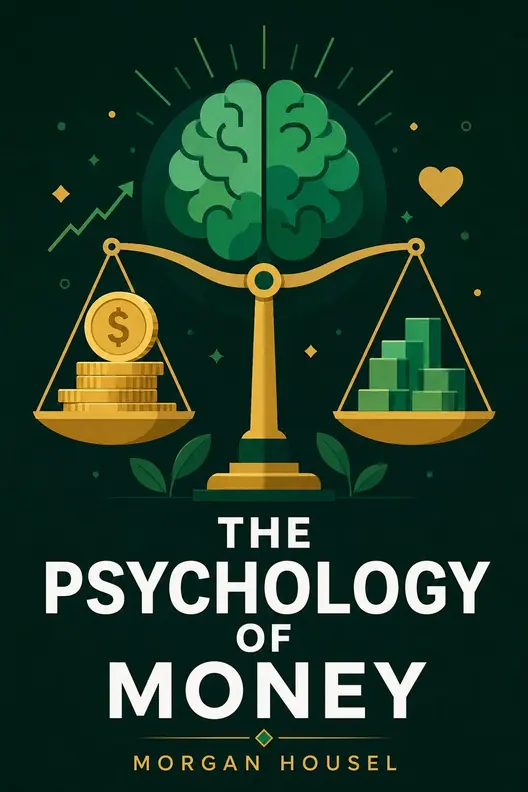
Cover of The Psychology of Money

Finance

The Psychology of Money

by Morgan Housel

Why do clever people go broke?

Morgan Housel's answer is that doing well with money has little to do with how smart you are and a lot to do with how you behave. Behaviour is hard to teach, even to very clever people. His book is a set of short chapters about that behaviour.

Hear a sample · read by Laura

0:27

What you'll learn

  • Getting rich, staying rich
  • Buffett's real secret
  • The man in the car
  • Knowing when it's enough

The key ideas in The Psychology of Money

Getting rich, staying rich

Housel treats these as two different skills. Getting money takes risk and optimism. Keeping it takes humility, and a healthy fear that what you've made could be taken away. So he puts survival first, because you need to still be in the game when compounding pays out.
Buffett's real secret

Warren Buffett is a brilliant investor, but Housel points out that most of his fortune arrived after he turned 65. He started investing as a boy and never stopped. His skill is investing. His secret is time.

The man in the car

Housel once worked as a hotel valet. He noticed that when people see a flash car, they barely think about the driver. They picture themselves in it. That's why spending to be admired rarely works, and why real wealth is the car you never bought.

Knowing when it's enough

At a billionaire's party, Kurt Vonnegut teased Joseph Heller that their host made more in a day than Catch-22 had ever earned. Heller replied that he had something the man would never have, which was enough. Housel says the hardest money skill is to stop the goalposts moving.

Lines worth underlining

  1. Behaviour

    How you behave with money matters more than how much you know about it.

  2. Enough

    The hardest thing to learn about money is when to stop wanting more.

  3. Time

    Most of Warren Buffett's fortune came from starting as a boy and never stopping.

  4. Room for error

    Expect some of your plans to go wrong, so one bad year can't knock you out.

  5. Unseen wealth

    Wealth is the money you chose not to spend, which is why nobody can see it.

A story from the book

The janitor and the executive

Ronald Read worked at a petrol station and swept floors in Vermont. When he died, he left millions, most of it to his local hospital and library. Richard Fuscone, a Harvard-educated Merrill Lynch executive, borrowed heavily to live grandly and ended up bankrupt.

Hot take · true or myth?

A slightly irrational money decision can be the smarter one.

See the book's answer

True. Housel prefers reasonable to rational. A plan you'll stick with when you're scared, like keeping more cash than a spreadsheet says you need, beats a perfect one you'll abandon.

One thing to try

Save for no reason

This week, set up a standing order that moves a fixed sum into savings the day you're paid, with no goal attached. Housel argues you don't need a house or a holiday to save for. Money put aside buys you options, and a cushion when life surprises you.

There's more to The Psychology of Money

Knotd has the key ideas from 250+ non-fiction books, each in a few minutes, in plain words. The Psychology of Money comes with a Hot Take round and a Your Move story to make it stick.

Get the whole book on KnotdOpen in the app

Questions about The Psychology of Money

What is The Psychology of Money about?

Why do clever people go broke? Morgan Housel's answer is that doing well with money has little to do with how smart you are and a lot to do with how you behave. Behaviour is hard to teach, even to very clever people. His book is a set of short chapters about that behaviour.

What are the key ideas in The Psychology of Money?

Getting rich, staying rich; Buffett's real secret; The man in the car; Knowing when it's enough.

What's one thing to try from The Psychology of Money?

This week, set up a standing order that moves a fixed sum into savings the day you're paid, with no goal attached. Housel argues you don't need a house or a holiday to save for. Money put aside buys you options, and a cushion when life surprises you.

Is The Psychology of Money on Knotd?

Yes. Knotd has the key ideas from The Psychology of Money in a few minutes, in plain words, plus a Hot Take round and a Your Move story to test them. It's one of 250+ non-fiction books in the app.