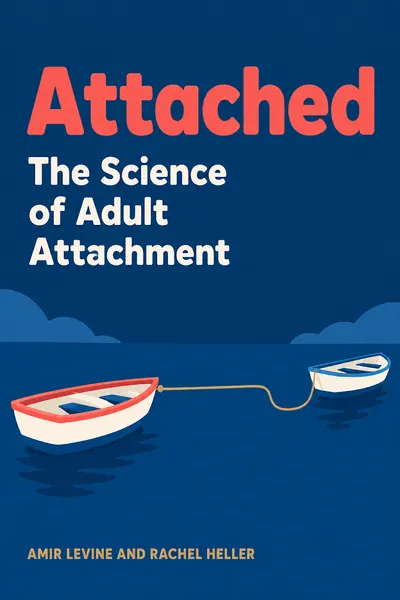
Cover of Attached

Relationship

Attached

by Amir Levine and Rachel Heller

Why do some loves feel frantic?

With some partners you feel calm. With others you're checking your phone at 2am. Amir Levine, a psychiatrist, and Rachel Heller say much of the difference comes from attachment, an old system built to keep us close to the people we depend on, which runs our adult love lives too.

Hear a sample · read by Laura

0:31

What you'll learn

  • Anxious, avoidant, secure
  • The dependency paradox
  • The anxious-avoidant trap
  • Say what you need

The key ideas in Attached

Anxious, avoidant, secure

Building on John Bowlby's attachment theory, Levine and Heller sort adults into three main styles. Secure people are comfortable with closeness. Anxious people crave it and worry about losing it. Avoidant people prize independence and pull back when things get close. Secure is the most common.

The dependency paradox

We're told a healthy adult shouldn't need anyone. Levine and Heller disagree. The more securely we can depend on a partner, the more independent and daring we become, because we have a safe base to come back to. Needing your partner is normal, and nothing to be ashamed of.

The anxious-avoidant trap

Anxious and avoidant people are often drawn to each other. One reaches for closeness, the other pulls away, and each move confirms the other's worst fears. The highs and lows can feel like passion. Levine and Heller say it's more often an attachment system stuck on high alert.

Say what you need

The authors' secure alternative to games is what they call effective communication. Say plainly what you need, without blame or apology. How the other person responds tells you whether they can meet you.

Lines worth underlining

  1. Dependency

    Needing your partner is normal. People are built to lean on the ones they love.

  2. Three styles

    Most people love in one of three styles: anxious, avoidant or secure.

  3. Anxious

    Anxious people worry about their partner's love and notice every small sign of distance.

  4. Avoidant

    Avoidant people keep partners at arm's length and feel crowded when things get close.

  5. The trap

    Anxious and avoidant people often end up together. One chases, the other backs away, and neither feels safe.

A story from the book

A hand in the scanner

The authors describe a study by the psychologist James Coan. Married women in a brain scanner were warned they might get a mild electric shock. Holding their husband's hand calmed the brain's threat response more than a stranger's hand did, and most of all in the happiest marriages.

One thing to try

Name the need, once

Next time you feel the urge to go quiet, check their location or wait an hour to text back, stop. Write down what you actually need in one plain sentence. Then say it to them calmly, and notice how they respond.

There's more to Attached

Knotd has the key ideas from 250+ non-fiction books, each in a few minutes, in plain words. Attached comes with a Name That Idea round and a Your Move story to make it stick.

Get the whole book on KnotdOpen in the app

Questions about Attached

What is Attached about?

Why do some loves feel frantic? With some partners you feel calm. With others you're checking your phone at 2am. Amir Levine, a psychiatrist, and Rachel Heller say much of the difference comes from attachment, an old system built to keep us close to the people we depend on, which runs our adult love lives too.

What are the key ideas in Attached?

Anxious, avoidant, secure; The dependency paradox; The anxious-avoidant trap; Say what you need.

What's one thing to try from Attached?

Next time you feel the urge to go quiet, check their location or wait an hour to text back, stop. Write down what you actually need in one plain sentence. Then say it to them calmly, and notice how they respond.

Is Attached on Knotd?

Yes. Knotd has the key ideas from Attached in a few minutes, in plain words, plus a Name That Idea round and a Your Move story to test them. It's one of 250+ non-fiction books in the app.