Listening to audiobooks is close to the same as reading, as long as you're paying attention. In a 2016 study of 91 adults, people who listened, read or did both scored about the same on a comprehension test, right away and two weeks later. Attention is the catch: in a 2013 study, students' minds wandered on about half of the checks while listening and about a third while reading silently, and they remembered less of what they heard.
So reading keeps the edge for dense books you need to go back over, and listening wins on time, because it fits books into commutes and chores. The studies are small, so we've put them in one table with who took part and what each can't tell you, then turned them into a format-by-goal table and a checklist for remembering more of what you hear.
Audiobooks vs reading: what the studies found
The three experiments measured different things, from brain activity to attention, and none of them is large.
| Study | Who took part | What they compared | Result | Limits |
|---|---|---|---|---|
| Deniz et al. (2019), Journal of Neuroscience | 9 adults aged 24 to 36, in an fMRI scanner | Listening to vs reading the same spoken stories | Brain maps of meaning nearly identical | Tiny sample; words shown one at a time; no memory test |
| Rogowsky, Calhoun & Tallal (2016), SAGE Open | 91 adults, randomly split into three groups | Audiobook vs e-text vs both at once | No significant difference in comprehension, right after or two weeks later | One excerpt of one book; about 30 people per group |
| Varao Sousa, Carriere & Smilek (2013), Frontiers in Psychology | 211 university students, in two samples | Listening vs reading silently vs reading aloud | More mind wandering and weaker memory when listening | Students in a lab; short excerpts; self-reported mind wandering |
Read together, they fit one story. When people pay attention, understanding by ear and by eye ends up close. The difference shows up in how hard it is to keep paying attention, and in what you can do when you lose the thread.
Deniz et al. (2019): the brain maps meaning the same way
At UC Berkeley, Fatma Deniz and her colleagues scanned nine people while they listened to autobiographical stories from The Moth Radio Hour, and again while they read the same stories. For each person, they modeled which small patches of the cortex responded to which kinds of meaning. The maps from listening and from reading were highly correlated across most of the regions that respond to meaning, and a model trained on one format could predict brain responses in the other. The paper's own summary calls the two sets of representations "almost identical."
This is the study to know on the audiobooks vs reading brain question, and its limits matter. Nine people is a small sample, and two of them were authors of the paper. In the reading condition, words flashed up one at a time for as long as each word took to say in the recording, so readers couldn't slow down or look back. The authors chose that design to make the two formats comparable, and they note that it isn't natural reading.
The study also measured where meaning is represented in the brain, not how much people understood or remembered. The authors add that their model doesn't capture humor, sarcasm, metaphor or the shape of a story, and that these could be represented differently by ear and by eye.
Rogowsky, Calhoun & Tallal (2016): similar comprehension
Beth Rogowsky and her colleagues randomly assigned 91 adults to three groups. Each group took in the same material, the preface and one chapter of a nonfiction book, in a different form: as an audiobook, as e-text on a tablet, or as both at once. Everyone then took the same written comprehension test, once right away and again two weeks later.
There were no statistically significant differences between the three groups at either point, for men or for women. All three groups recalled about the same amount.
This is the study NPR leaned on in its 2025 report, and it's a fair one: people were assigned at random and retested two weeks later. Its limits are one excerpt from one book and about 30 people per group, which is too few to detect a small difference. It also says nothing about listening while you drive or cook. And as NPR's reporter pointed out, the participants were adults who already knew how to read. For children still learning, Rogowsky recommends a book.
Varao Sousa, Carriere & Smilek (2013): minds wander more when listening
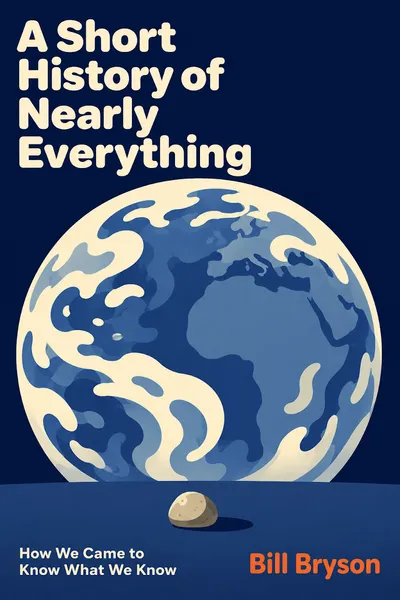
This study complicates the picture. Researchers at the University of Waterloo gave 211 students three excerpts of about 1,800 words each from Bill Bryson's A Short History of Nearly Everything. Each student read one excerpt aloud, read one silently, and heard one as an audio recording read by Bryson himself. Ten times during each excerpt, a box popped up asking whether their mind had been wandering just before.
Listeners said yes to about half the probes; silent readers said yes to just over a third. Listening also produced the lowest scores on a memory test of the passages and the lowest interest ratings. Reading aloud produced the least mind wandering of all, and the pattern held in both samples.
The limits are real: these were students in a lab reading short passages, and mind wandering was self-reported. Listeners sat looking at a blank white screen, which is not how most people listen. Still, the result matches what many listeners notice on a commute. A recording keeps playing when your attention drifts, while a page waits for you.
Where reading has the edge
The gap between reading and listening to books shows up in the studies that used explanatory material: the Waterloo students heard popular science, and in a 2010 classroom study covered below, students heard a primary source as a podcast. Hard material makes you slow down and reread, and print makes both easy. Print also shows you the structure through headings and paragraphs, which a recording mostly can't.
These are the situations where we'd pick the text:
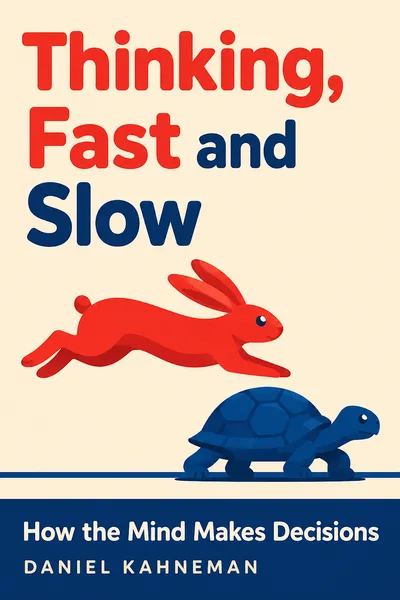
- Dense arguments. Thinking, Fast and Slow is easier on the page. Daniel Kahneman builds his case from small puzzles, such as the Linda problem, which asks you to judge which of two descriptions of a woman is more likely. On paper you can commit to an answer before reading his explanation, and that's where the lesson lands: your intuition just broke a basic rule of probability. On audio, the explanation often arrives while you're still deciding.
- Numbers, charts and formal papers. The same book reprints two of Kahneman and Tversky's original journal papers as appendices. Anything you need to compare line by line, like a table or a worked calculation, belongs on a screen or a page.
- Material you'll use at work. If an idea is going into a deck or a client conversation, you'll want the exact passage again. Finding a sentence in text takes seconds, while finding it in a recording means scrubbing back and forth.
- Setting your own pace. In the brain-scan study above, researchers took control of pace away from readers on purpose to make reading match listening. Outside the lab, that control is reading's main advantage: you move fast through easy parts and slow down where it's hard. Popular science books, with chains of reasoning that each depend on the step before, are full of hard parts.
Where listening has the edge
Listening's biggest advantage is time. You can't hold a book while you drive or fold laundry, and Rogowsky told NPR that her result was good news for book club members who want to fold laundry at the same time. For someone whose free time comes in a commute or a gym session, audio adds books to hours that would otherwise have none.
The second advantage is the voice. Speech carries prosody, the pitch, tempo and stress that print leaves you to infer. Take the sentence "I never said she took it." Stress "never" and it's a denial; stress "she" and someone else took it. On the page you guess which one the writer meant, while a narrator picks one for you.
Memoirs and stories are where these two advantages add up. Shoe Dog is Phil Knight's first-person account of building Nike, with chapters named for the years from 1962 to 1980. It has one narrator and a clear timeline. The brain-scan study that found listening and reading nearly identical used stories that were first told aloud to a live audience. If your attention drifts for a sentence while you change trains, the story carries you back. Most of the memoirs and life stories on our Biographies page work the same way.
There is one condition: the other task has to leave your attention free. The Waterloo listeners had nothing else to do and still drifted on about half the checks. If the second task needs real thought, like writing or a hard problem, expect to keep the gist and lose the detail.
Is listening to audiobooks the same as reading, or cheating?
For adults who read well, it isn't cheating. Daniel Willingham, a University of Virginia psychologist who writes about reading and education, took up the question in The New York Times in December 2018. His answer, in our words: no, and the two formats suit different goals.
The reasoning starts with a model reading researchers have used since Philip Gough and William Tunmer proposed it in 1986, the "simple view of reading." It splits reading into two parts. Decoding turns print into words, and comprehension turns words into meaning. For a skilled adult reader, decoding is automatic, so once the words are identified, by eye or by ear, the same comprehension does the work. That fits both the Deniz brain maps and the Rogowsky test scores.
Where the formats differ is in how we use them. In a 2010 classroom study, David Daniel and William Douglas Woody gave students a primary source either as a podcast or as text, then quizzed them. The podcast group did worse. The students had preferred the podcast at the start, and their preference changed right after the quiz. Difficult material calls for going back over it, and print makes that easy.
So whether listening counts depends on what you want from the book:
| Your goal | Better format | Why |
|---|---|---|
| A memoir or a book club pick | Either; audio if it frees up time | No comprehension gap in the 2016 study, and a story pulls you back when you drift |
| A dense argument you want to master | Text, or audio first and text for review | Listeners drifted more and remembered less in the 2013 study |
| Ideas you'll use at work | Text for those chapters | Passages are faster to find and mark |
| Books for the commute or chores | Audio | It's time you couldn't read in anyway |
| A child learning to read | Rogowsky's advice: they need practice reading |
Plenty of people still see it differently. NPR reports that in an NPR-Ipsos poll in 2025, 40 percent of American adults said listening to audiobooks is not a form of reading. For adults who already read well, the studies above don't back that view, although they do back the instinct to read the hard books.
How to remember more from audio
The research points to two risks with audio: attention drifts, and going back is awkward. On audiobooks vs reading retention, this checklist targets both.
- Pause after each chapter and say the main point out loud. One sentence, in your own words. In the Waterloo study, reading aloud kept minds from wandering more than anything else. Saying the point yourself isn't the same task, but it puts you back in the active role.
- Replay one chapter, not the whole book. Pick the chapter you most want to keep and listen again within a few days. Re-listening to everything costs time you could spend on the next book.
- Switch to text for the chapters you'll use. If an idea is going into your work, read that chapter on the page, where you can slow down and mark it.
- Save audio for tasks that leave your attention free. A walk or the dishes is fine. Skip it while you write or work through a hard problem.
- Note where an idea landed. When something hits, pause and jot the chapter name, so your review in text starts in the right place.
For a fuller routine on recall and spacing, see how to remember what you read.
Use both: listen first, then review in text
You don't have to pick one format. A split that fits the evidence: use audio for a first pass, to get a book's arc and decide whether it deserves more of your time, then use text for review and for the parts you'll put to work.
Sapiens is a good test case. Its arc, from the cognitive revolution to the scientific revolution, carries well by ear. But if you want to argue with Yuval Noah Harari's claim that farming left most individual people worse off than foragers, you'll want that chapter in text, where you can check each step of the argument.
Knotd, our app, is set up for this split. Each of its 250+ nonfiction books has its key ideas as audio narrated by Laura and as text, so you can listen on the commute and review the same chapter in text that evening. It covers each book's key ideas, not the full book.
For full audiobooks, Audible and Libby are the places to go. Audible's App Store listing (as of October 2026) offers 1M+ audiobooks plus Audible Originals and podcasts, and it suits anyone who wants whole books read aloud. Libby, built by OverDrive, lets you read or listen to your public library's ebooks and audiobooks with a library card, according to its App Store listing (October 2026), so it suits readers who would rather borrow than buy. Two apps offer short summaries you can read or hear. Blinkist's App Store listing counts 9,000+ books and podcasts, which suits readers who want breadth. Headway's listing counts 1,700+ summaries, alongside a daily learning session and self-growth challenges, which suits people who want a daily habit (both as of October 2026).
To fit any of these into a busy schedule, see how to read more with a full-time job.