
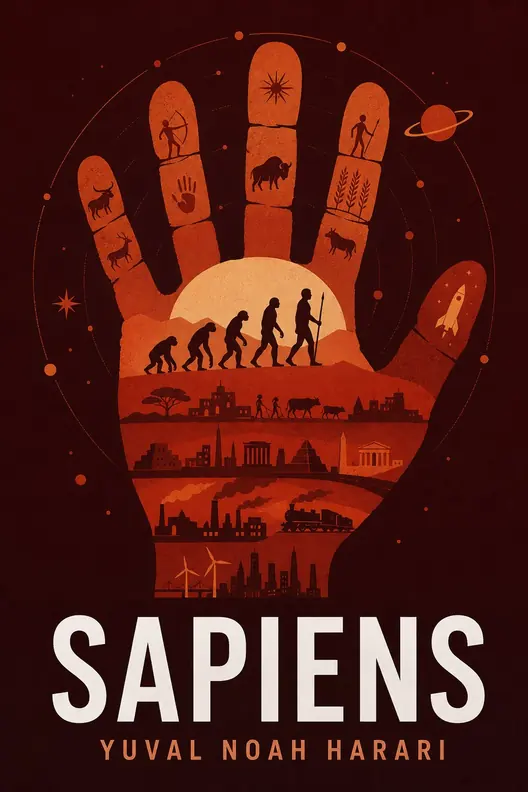
Cover of Sapiens

History

Sapiens

by Yuval Noah Harari

How did we end up in charge?

Seventy thousand years ago, Homo sapiens was an unremarkable animal in a corner of Africa, one human species among several. Today we run the planet. Yuval Noah Harari asks how that happened, and whether it has made any of us happier.

Hear a sample · read by Laura

0:26

What you'll learn

  • The Cognitive Revolution
  • Wheat domesticated us
  • Money, empires, religions
  • Admitting we don't know

The key ideas in Sapiens

The Cognitive Revolution

Around 70,000 years ago, Harari argues, Sapiens began to think and talk in new ways. We could gossip, and we could talk about things that don't exist, like spirits and tribal gods. Believing the same stories let us work together with strangers.

Wheat domesticated us

Harari calls the Agricultural Revolution history's biggest fraud. Farming fed more people, but most farmers worked harder, ate a poorer diet and fell ill more often than foragers had. In his telling, wheat did well out of the deal, spreading across the world while humans broke their backs tending it.

Money, empires, religions

Harari names three universal orders that pulled humankind towards one global society. Money came first, then empires, then universal religions. Money is the most trusted. Christians and Muslims who couldn't agree about God would still happily accept each other's coins.

Admitting we don't know

The Scientific Revolution began, Harari argues, when Europeans started admitting what they didn't know. Older maps filled unfamiliar places with monsters or left them out. Newer ones left blank spaces, and explorers and scientists set out to fill them, often paid for by empires and investors hoping for a return.

Lines worth underlining

  1. Shared stories

    Our ancestors took over the world because they could believe in things that exist only in stories.

  2. Farming

    Farming gave us more food, but most farmers worked harder and ate worse than foragers.

  3. Wheat

    Wheat ended up running our lives. We cleared land, hauled water and settled down just to grow it.

  4. Money

    Money is the one story almost everyone trusts, so total strangers can trade with each other.

  5. Ignorance

    Science took off once Europeans admitted how much they didn't know and went looking.

A story from the book

The company that can't die

Harari uses the car maker Peugeot to show what he calls a legal fiction. Imagine every Peugeot factory burned down and every worker died. The company could still borrow money, hire new staff and build again. It exists because the law says so, and we all believe it.

Hot take · true or myth?

Money works because people trust that others will accept it.

See the book's answer

True. Harari calls money a system of mutual trust. Shells, barley and coins all worked because people believed others would take them in exchange.

One thing to try

Count the stories you live by

Today, notice three things you rely on that exist only because people believe in them, like the money in your pocket, your school or employer, or the country on your passport. Pick one, and ask what would happen if everyone stopped believing in it tomorrow.

There's more to Sapiens

Knotd has the key ideas from 250+ non-fiction books, each in a few minutes, in plain words. Sapiens comes with a Hot Take round and a Name That Idea round to make it stick.

Get the whole book on KnotdOpen in the app

Questions about Sapiens

What is Sapiens about?

How did we end up in charge? Seventy thousand years ago, Homo sapiens was an unremarkable animal in a corner of Africa, one human species among several. Today we run the planet. Yuval Noah Harari asks how that happened, and whether it has made any of us happier.

What are the key ideas in Sapiens?

The Cognitive Revolution; Wheat domesticated us; Money, empires, religions; Admitting we don't know.

What's one thing to try from Sapiens?

Today, notice three things you rely on that exist only because people believe in them, like the money in your pocket, your school or employer, or the country on your passport. Pick one, and ask what would happen if everyone stopped believing in it tomorrow.

Is Sapiens on Knotd?

Yes. Knotd has the key ideas from Sapiens in a few minutes, in plain words, plus a Hot Take round and a Name That Idea round to test them. It's one of 250+ non-fiction books in the app.