Read Atomic Habits if you want a system for building habits. Read The Power of Habit if you want to understand why habits run people and companies. Read Tiny Habits if you keep failing to start.
Atomic Habits vs The Power of Habit mostly comes down to that split: James Clear hands you a method, and Charles Duhigg explains the machinery. If you plan to read both, start with Duhigg, because Clear's four laws build on his loop. BJ Fogg's Tiny Habits is the third book people weigh, and it's the most useful of the three when your problem is day two, not week six.
Below are the three models side by side, the studies behind them, a decision table, and a one-week experiment that borrows one tool from each book.
How we compared: we checked each book's model against the author's own website and read the primary studies the books draw on. We opened every web source on 14 October 2026. Knotd publishes this page and carries all three books in its app.
The three books at a glance
| Book | Author's background | Core model (our words) | Best for | Style |
|---|---|---|---|---|
| Atomic Habits (2018) | James Clear, a writer on habits and decision-making | Four stages (cue, craving, response, reward), with one law of design for each | Building a habit system you can run yourself | Short chapters, personal and sports examples, a summary list per chapter |
| The Power of Habit (2012) | Charles Duhigg, then a reporter at The New York Times | A loop of cue, routine and reward, driven by craving; keystone habits that set off wider change | Understanding habits, and changing them in teams and companies | Long-form reporting on companies, athletes and lab research |
| Tiny Habits (2019) | BJ Fogg, founder of Stanford's Behavior Design Lab | Behavior happens when motivation, ability and a prompt meet; start tiny, anchor it, celebrate | Starting after many false starts | Practical, with recipes and exercises to do as you read |
Atomic Habits vs The Power of Habit: two versions of the same loop
The two books describe the same basic mechanism. They differ in what they add to it and in what they expect you to do next.
How the models differ
Duhigg's loop has three parts: a cue that sets the behavior off, the routine itself, and a reward that makes the brain want to run the loop again. He argues that craving is what keeps the loop turning. Once the brain links a cue to a reward, it starts wanting the reward as soon as the cue appears.
Clear makes that craving a stage of its own, so his loop has four: cue, craving, response, reward. He then gives each stage a design rule (make it obvious, make it attractive, make it easy, make it satisfying) and inverts the rules for breaking a bad habit, as set out in Clear's own summary of the four laws.
In practice, Duhigg gives you a diagnostic and Clear gives you levers. Duhigg's main advice for changing a habit is to keep the cue and the reward and swap the routine, which he calls the golden rule of habit change. Clear's laws let you work on any stage, so you can also hide the cue entirely or put the routine out of reach.
Identity-based habits vs keystone habits
Each book puts one big idea on top of the loop, and they point in different directions.
Clear's idea is identity. He argues that change lasts when you first decide who you want to be, then treat each repetition as a vote for that person. His example is two people offered a cigarette: one says they're trying to quit, the other says they're not a smoker. The second has changed who they are, and the habit follows.
Duhigg's idea is the keystone habit: one habit that sets off a chain of other changes. His best-known case is Alcoa, where Paul O'Neill made worker safety the company's first priority. Duhigg argues that the routines built around safety changed how the whole company communicated and worked.
So Clear asks who you're becoming, and Duhigg asks which habit will pull others along with it. If you manage a team, Duhigg's question is often the more useful one.
Personal stories vs company stories
Duhigg's book reads like a long newspaper feature. It covers Starbucks' staff training, Target's purchase predictions, Procter & Gamble's Febreze launch and Michael Phelps's race-day routine, alongside neuroscience labs. Clear writes shorter chapters built on personal and sports examples, and closes each one with a summary you can scan later.
Which is better: Atomic Habits or The Power of Habit
They answer different questions, so "better" depends on yours. For personal change, Atomic Habits is the more practical book, with a plan you can follow chapter by chapter. For understanding why you do what you do, or for changing habits at work, The Power of Habit gives you more.
If you read both, read Duhigg first. Clear's four stages work as an extension of Duhigg's loop, and the method makes more sense once you know the mechanism.
Atomic Habits vs Tiny Habits: make it easy or make it tiny
These two overlap more than any other pair. Clear's habit stacking (after one thing you already do, do the new habit) comes from Fogg: Clear credits the method to Fogg's Tiny Habits program on his own site. Both books tell you to start small and attach new habits to existing routines. They part ways on how small, and on what happens after you act.
Make it easy vs make it tiny
Clear's third law is about removing friction. Its best-known tool is the Two-Minute Rule, which scales a new habit down to its opening move. "Write the weekly status update" becomes "open the doc and type the date."
Fogg goes smaller. A tiny habit should be doable on your worst day with almost no motivation, such as flossing one tooth. His reasoning comes from his behavior model: motivation rises and falls, so a habit that depends on it fails on low days, while ability is the dial you can set in advance.
The difference shows after the first week. Clear treats the small start as a gateway you scale up on purpose. Fogg lets the tiny version stay the minimum for as long as you like; anything more is a bonus, never the requirement.
Reward vs celebration
Clear's fourth law makes the habit satisfying with an immediate reward, often as simple as ticking a tracker, plus a rule never to miss twice in a row.
Fogg replaces rewards with celebration. Right after the tiny behavior, you create a feeling of success on purpose, with a fist pump or a quiet "nice". He calls that feeling Shine, and argues that emotion wires a habit in more than repetition does.
Who struggles with what
- You start strong and fade by week three. Atomic Habits has the tools for that, chiefly environment design and the never-miss-twice rule.
- You can't get past day two, or you feel guilty every time a plan dies. Tiny Habits fits better. Fogg treats a failed habit as a design problem, not a character flaw.
The Power of Habit vs Tiny Habits
These two have the least in common. Duhigg explains why habits run the way they do and shows you how to swap a routine. Fogg gives you a step-by-step way to build new habits from nothing.
Duhigg's own example near the end of his book shows the difference. He noticed he ate a cookie from the cafeteria every afternoon, tested other rewards, and found that what he wanted was a break to chat with colleagues. That's a tool for taking a habit apart. Fogg spends most of Tiny Habits on adding good habits and comes to stopping unwanted ones later.
Pick The Power of Habit to understand or break a habit, and Tiny Habits to build one.
What the research says, and what the books simplify
All three books draw on behavioral science, and all three compress it. Four findings are worth knowing before you plan anything.
Habits take weeks to months, not 21 days
The best-known study is Lally and colleagues' 2010 habit-formation study. Ninety-six volunteers, mostly postgraduate students with a mean age of 27, each picked an eating, drinking or exercise behavior to do daily in the same context (such as "after breakfast") for 12 weeks, and rated how automatic it felt.
Of the 82 people with enough data, the researchers' curve fit well for 39. For them, the median time to reach 95% of their own plateau of automaticity was 66 days, with a range of 18 to 254 days. The study lasted 84 days, so the longest times are projections from each person's curve. Exercise habits took about one and a half times as long as eating or drinking ones, but the difference wasn't statistically significant and the study wasn't designed to test it. Missing a single day didn't materially affect progress.
What it can't tell you: it's one small study of simple health behaviors, and automaticity was self-reported. It only tested single missed days, and the authors point to an earlier exercise study where a missed week did hurt. Still, it's the best evidence against the popular 21-day figure, and it fits Clear's never-miss-twice rule: one slip did no lasting harm, so guard against a run of them.
Context does most of the work
Wendy Wood is a psychologist, now Provost Professor Emerita at the University of Southern California, and her lab has run many of the studies on context cues. In Wood and Neal's 2007 review of how habits and goals interact, habits form as an action gets linked to features of its setting, such as a place or the action before it. Once a habit forms, the setting triggers it without any goal in mind. In the diary studies they cite, about 45% of the behaviors people logged were repeated in the same place almost every day. Students who transferred to a new university lost strong habits when the move changed the setting, such as where they exercised or who they read the paper with, and their behavior then followed their goals instead. Habits survived the move when the setting stayed the same. So a new job or a move is a good window to start a habit or drop one.
All three books use this idea under different names: Duhigg's cues, Clear's "make it obvious" and Fogg's anchors. Wood's own book, Good Habits, Bad Habits, is the long version, and it puts more weight on reshaping your surroundings and less on resolve than the other three.
B=MAP is a design model, not a measurement
Fogg's model, set out on his Behavior Model site, says a behavior happens when motivation, ability and a prompt come together at the same moment. When the behavior doesn't happen, at least one of the three is missing. It's a framework for design, not a finding with an effect size, and it works best as a checklist when a habit isn't happening.
Willpower is less of a fuel tank than The Power of Habit suggests
The Power of Habit's Starbucks chapter treats willpower as a muscle that tires with use, drawing on lab studies from the late 1990s. In 2016, a preregistered replication across 23 labs and 2,141 participants found an effect of d = 0.04, with a confidence interval that included zero. Researchers still debate the idea, but it's too shaky to plan around. The Starbucks training Duhigg describes, where staff rehearse what to do in hard moments, doesn't depend on the muscle theory.
| Claim you'll hear | What the evidence says | Source |
|---|---|---|
| A habit takes 21 days | Median 66 days, range 18 to 254, for the 39 of 96 people whose data fit the model | Lally et al. 2010 |
| Miss a day and you start over | One missed day didn't materially set people back | Lally et al. 2010 |
| Change your setting to change a habit | Supported: habits are cued by places and preceding actions | Wood & Neal 2007 |
| Willpower is a tank that empties with use | A 23-lab replication of the lab effect found it close to zero | Hagger et al. 2016 |
Which habit book to read first, by situation
Start from the problem you have, not from the most popular title.
| Your situation | Read | Why |
|---|---|---|
| You can't start | Tiny Habits | It shrinks the habit until motivation stops mattering |
| You start but don't stick | Atomic Habits | Environment design, tracking and a rule for missed days |
| You want to break a habit | The Power of Habit | It shows you how to find the cue and reward, then swap the routine |
| You want to change a team's habits | The Power of Habit | Keystone habits and company case studies |
| You want the science | The Power of Habit, then Good Habits, Bad Habits | Duhigg tells the lab stories; Wood, a habit researcher, gives the fuller evidence |
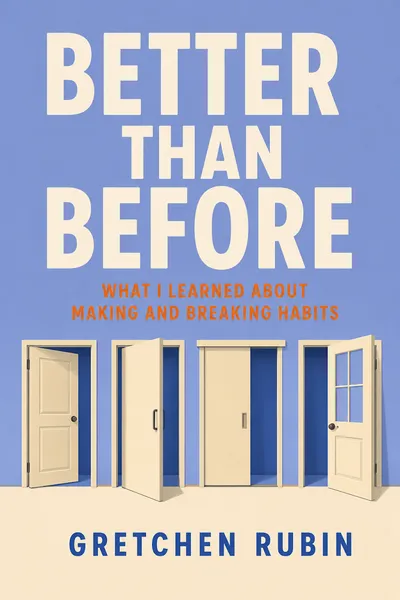
| Rules make you rebel | Better Than Before | It matches strategies to your personality |
If none of these fits, the rest of the shelf is on our habits page.
A one-week experiment using all three books
Pick one habit to change and one to build. Say you're a product manager who opens Slack the moment you sit down, and you want to read a few pages after lunch instead of scrolling. Use a notes app or a paper card, and on day 1 change nothing except what you notice.
| Day | Book | What to do | Write down |
|---|---|---|---|
| 1 | The Power of Habit | Each time the old habit happens, note the five cue types Duhigg suggests checking: place, time, mood, who's around, what you just did | The five notes, every time |
| 2 | The Power of Habit | When the urge hits, try a different reward (a walk, a glass of water, an apple, a chat) and check later whether the urge has gone | Which reward settled it |
| 3 | Tiny Habits | Write a recipe for the new habit: "After I [anchor], I will [tiny version]." Make it so small it feels silly, do it, then celebrate on the spot | The recipe, and whether you did it |
| 4 | Atomic Habits | Make it obvious: put the cue for the new habit in sight and hide the cue for the old one | What you moved |
| 5 | Atomic Habits | Make it easy: cut the new habit to one step, add a step to the old one | Steps cut and added |
| 6 | Atomic Habits | Make it attractive and satisfying: pair the new habit with something you enjoy, and tick a tracker | Your tracker |
| 7 | All three | Review, using the checklist below | Your plan for the next month |
For the example above, day 3 might read "After I clear my lunch tray, I will open my book." Day 4 might mean leaving the book on your keyboard when you go to lunch, and quitting Slack before you leave each evening. If the habit you're changing is reaching for your phone, our guide to replacing doomscrolling with learning goes further.
On day 7:
- Count the days each habit happened.
- Name the cue that showed up most often on days 1 and 2.
- Pick the single change that made the biggest difference: the swapped reward, the tiny recipe or the redesigned desk.
- Keep what worked and drop the rest.
- Plan in months: in Lally's study the median was 66 days, and one missed day didn't set people back.
The same pattern works for any book with a model in it. How to apply what you read has worked examples from work.
If you've read all three
Check that the three models are separate in your head before adding a fourth. In Knotd, each of these books has a Name That Idea round where you match the author's terms (habit stacking, chunking, Fogg's pearl habit) to their meaning, then spot each one in an everyday moment. The Tiny Habits deck adds a Hot Take card that asks whether a failing habit just needs more willpower. Knotd is our app.
Then pick by what you still want:
- The research behind all three: Good Habits, Bad Habits by Wendy Wood. It argues that friction and setting matter more than self-control, and it's written by a researcher whose lab ran many of the studies. Skip it if you want a step-by-step plan.
- A system that fits your personality: Better Than Before by Gretchen Rubin. Her Four Tendencies explain why a strict challenge works for one friend and backfires for another. Read it if the other books felt like rules written for someone else.
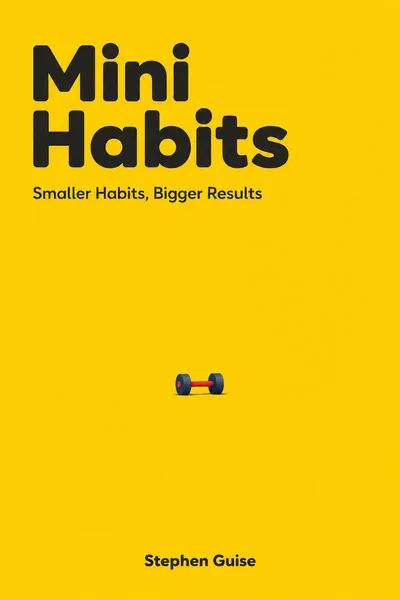
- The smallest possible start: Mini Habits by Stephen Guise, which began with one push-up as a whole day's goal. It's close to Tiny Habits but leans on a small dose of willpower instead of celebration. Try it if Fogg's recipes felt like too much structure.