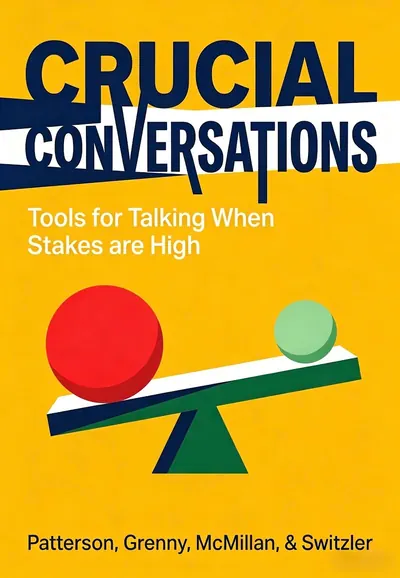
Cover of Crucial Conversations

Communication

Crucial Conversations

by Kerry Patterson, Joseph Grenny, Ron McMillan and Al Switzler

Why we blow the talks that matter

A crucial conversation has three marks. Opinions differ, the stakes are high and emotions run strong. The authors noticed that this is exactly when most of us handle things worst. We clam up, or we come out swinging. This book is about doing neither.

Hear a sample · read by Laura

0:25

What you'll learn

  • Fill the Pool of Shared Meaning
  • Start with Heart
  • Refuse the Fool's Choice
  • Watch for silence and violence
  • Catch the story you're telling

The key ideas in Crucial Conversations

Fill the Pool of Shared Meaning

Everyone walks into a hard talk with their own facts, feelings and theories. The authors picture a pool that the group fills together. The more that goes into it, the better the decision, and the more willingly people act on it, because they helped make it.
Start with Heart

Before you speak, ask what you really want for yourself, for the other person and for the relationship. Then ask how you'd behave if you really wanted those things. The question pulls you away from trying to win, or to punish.

Refuse the Fool's Choice

We often think there are only two options. Be honest and hurt someone, or keep the peace and say nothing. The authors call that the Fool's Choice. People who handle these talks well look for a third way, where they say what needs saying and keep the relationship.

Watch for silence and violence

When people stop feeling safe, they go one of two ways. Silence means masking, avoiding or withdrawing. Violence means controlling, labelling or attacking. Either way the pool stops filling. The fix is to step out of the topic for a moment and make it safe again.

Catch the story you're telling

Between what someone did and how you feel sits a story you told yourself about why. The authors call the chain the Path to Action. You see and hear, you tell a story, you feel, then you act. Question the story and the feeling can change.

Lines worth underlining

  1. High stakes

    The talks that matter most, with high stakes and strong feelings, are the ones we tend to handle worst.

  2. Shared meaning

    Good dialogue fills a shared pool of meaning, where everyone's facts and views can go in.

  3. Start with heart

    Start with heart. Ask yourself what you really want from this talk, and keep hold of it.

  4. Silence or violence

    Under stress most of us either go quiet or get aggressive. Notice which one you slip into.

  5. Safety

    When people turn defensive, they don't feel safe. Show respect and a shared aim, then return to the topic.

One thing to try

Open with the facts

Pick a conversation you've been putting off. Open with facts only, what you saw and heard, with no conclusions. That's the start of the book's STATE method.

There's more to Crucial Conversations

Knotd has the key ideas from 250+ non-fiction books, each in a few minutes, in plain words. Crucial Conversations comes with a Name That Idea round and a Your Move story to make it stick.

Get the whole book on KnotdOpen in the app

Questions about Crucial Conversations

What is Crucial Conversations about?

Why we blow the talks that matter A crucial conversation has three marks. Opinions differ, the stakes are high and emotions run strong. The authors noticed that this is exactly when most of us handle things worst. We clam up, or we come out swinging. This book is about doing neither.

What are the key ideas in Crucial Conversations?

Fill the Pool of Shared Meaning; Start with Heart; Refuse the Fool's Choice; Watch for silence and violence; Catch the story you're telling.

What's one thing to try from Crucial Conversations?

Pick a conversation you've been putting off. Open with facts only, what you saw and heard, with no conclusions. That's the start of the book's STATE method.

Is Crucial Conversations on Knotd?

Yes. Knotd has the key ideas from Crucial Conversations in a few minutes, in plain words, plus a Name That Idea round and a Your Move story to test them. It's one of 250+ non-fiction books in the app.