The last of the human freedoms
Almost everything could be taken from a prisoner. He remembers men who walked through the huts comforting others and giving away their last piece of bread.
Philosophy
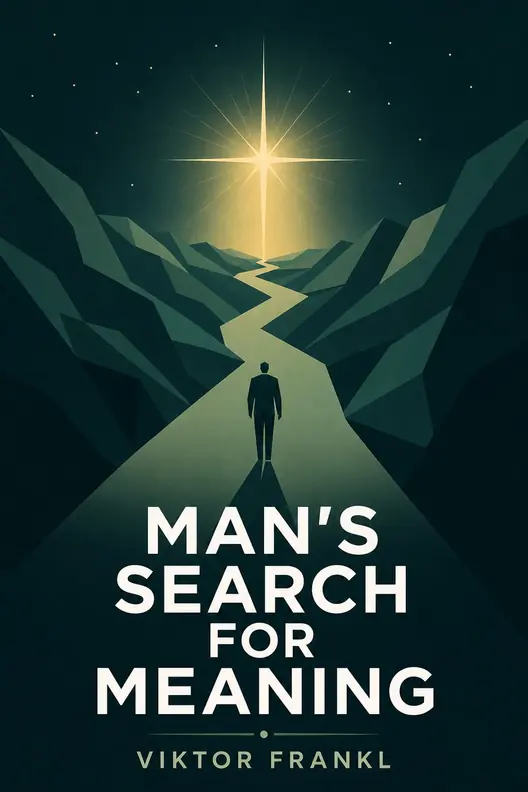
by Viktor E. Frankl
What keeps a person going?
Viktor Frankl, a Viennese psychiatrist, spent 1942 to 1945 in Nazi camps, Auschwitz among them. His wife, his parents and his brother did not survive. The first part of his book asks why some prisoners kept the will to live. The second is what he built from the answer.
Hear a sample · read by Laura
Almost everything could be taken from a prisoner. He remembers men who walked through the huts comforting others and giving away their last piece of bread.
Frankl quotes Nietzsche's line that he who has a why to live for can bear almost any how. Two fellow prisoners had given up. He helped each see something waiting for him. For one it was a child abroad. For the other, a scientist, it was books still to finish.
Frankl came to think people had the question the wrong way round. It didn't matter what we expected from life, he wrote, but what life expected from us. For Frankl, meaning is always concrete, the task in front of a particular person at a particular moment.
The second part of the book sets out logotherapy, Frankl's school of psychotherapy, built on what he calls the will to meaning. He names three sources. Creating a work or doing a deed. Experiencing something, or loving someone. And the attitude you take to suffering you cannot avoid.
Love
In the worst cold and hunger of the camps, Frankl kept going by picturing his wife's face.
The last freedom
Even in a death camp, nobody could take away a person's choice of how to respond.
A reason
Prisoners who had something to live for, like a loved one or unfinished work, held on longer.
Suffering
Suffering you can't avoid can still have meaning, in the way you choose to bear it.
Life asks
Frankl turned the question around. Life asks something of each of us, and we answer by what we do.
A story from the book
An elderly doctor came to Frankl, crushed by grief two years after his wife died. Frankl asked what would have happened if he had died first. She would have suffered terribly, the man said. Then you've spared her that, Frankl replied, at the price of mourning her. He left calmly.
One thing to try
Frankl offers a test for any choice. Live as if you were living for the second time, and had got it as wrong the first time as you're about to now. Tonight, try it on one decision you've been putting off, and notice what you'd do differently.
Knotd has the key ideas from 250+ non-fiction books, each in a few minutes, in plain words. Man's Search for Meaning comes with a Name That Idea round to make it stick.
Get the whole book on KnotdOpen in the appWhat keeps a person going? Viktor Frankl, a Viennese psychiatrist, spent 1942 to 1945 in Nazi camps, Auschwitz among them. His wife, his parents and his brother did not survive. The first part of his book asks why some prisoners kept the will to live. The second is what he built from the answer.
The last of the human freedoms; A why to live for; Life asks the question; Three sources of meaning.
Frankl offers a test for any choice. Live as if you were living for the second time, and had got it as wrong the first time as you're about to now. Tonight, try it on one decision you've been putting off, and notice what you'd do differently.
Yes. Knotd has the key ideas from Man's Search for Meaning in a few minutes, in plain words, plus a Name That Idea round to test them. It's one of 250+ non-fiction books in the app.